


Innovation Flywheel
A structured, iterative journey for transforming real-world challenges into validated solutions and meaningful outcomes.
From Opportunity to Impact
Discover → Define → Develop → Demonstrate → Deploy
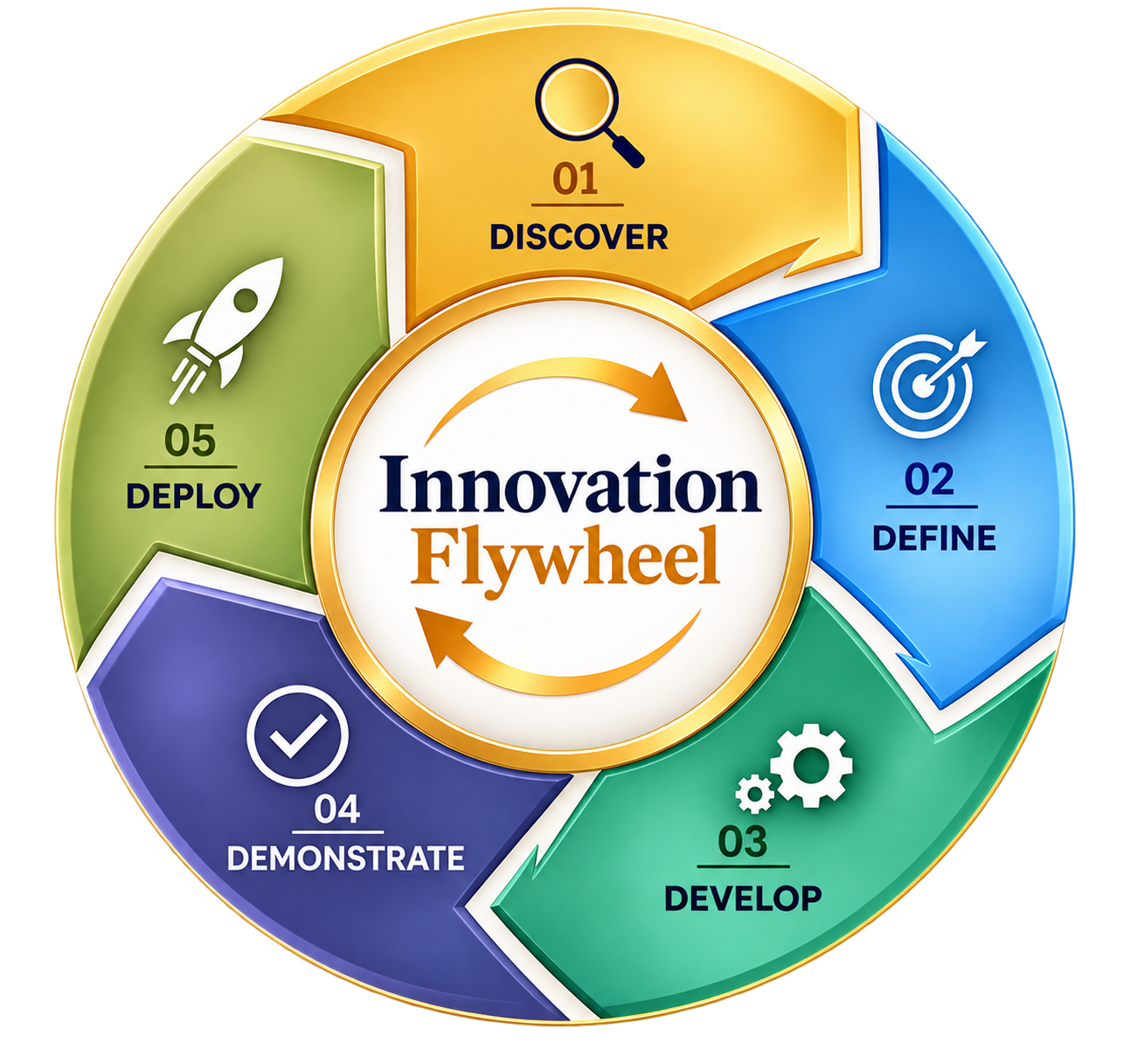
The Innovation Flywheel
Turning Opportunities into Outcomes
The Innovation Flywheel provides a structured pathway for transforming promising opportunities into solutions and meaningful outcomes.
It begins with identifying real-world challenges and opportunities, moves through definition, development and demonstration, and progresses towards deployment, venture creation or broader impact.
Unlike a linear process, the Flywheel is iterative. Learning at any stage can lead to refinement, validation or a return to an earlier stage before progressing forward.
2. The Five Stages

1. DISCOVER
Identify the opportunity
Every innovation begins with understanding a real-world challenge.
VedOrigin identifies and curates opportunities arising from grassroots challenges, emerging needs, technology gaps & areas with potential for meaningful impact.
Focus:
Challenges • Needs • Gaps • Opportunities
Output:
A clearly identified opportunity worthy of exploration.
2. DEFINE
Understand & Frame
An opportunity needs to be understood before a solution can be developed.
This stage focuses on defining the problem, understanding its context, identifying the people or systems affected, and assessing the potential for meaningful intervention.
Focus:
Problem • Context • Need • Potential
Output:
A clearly framed and prioritised opportunity.

3. DEVELOP
Shape the Solution
Promising opportunities are transformed into solution concepts and, where appropriate, prototypes.
The focus is on exploring possible approaches, developing the most promising concept and building the foundation needed for validation.
Focus:
Ideas • Solutions • Prototypes • Development
Output:
A solution concept or prototype ready for demonstration.
4. DEMONSTRATE
Validate the Potential
A solution needs to demonstrate its potential before it can move towards deployment.
This stage focuses on validation, refinement and readiness — assessing whether the solution is relevant, viable and capable of creating meaningful value.
Focus:
Validation • Testing • Refinement • Readiness
Output:
A validated solution with a clearer path towards deployment.
5. DEPLOY
Move Towards Implementation
Validated solutions can progress towards implementation, venture creation, adoption or scale.
Depending on the opportunity, deployment may contribute to a new venture, an industry solution, leadership development or broader societal and national impact.
Focus:
Implementation • Venture Creation • Adoption • Scale
Output:
A solution ready for deployment, implementation or further development.
3. How the Flywheel Moves
The journey is iterative, not linear
01
→
DISCOVER
04
→
DEMONSTRATE
02
05
→
DEFINE
DEPLOY
03
→
DEVELOP
At every stage, new evidence and learning can lead to refinement and movement back through the Flywheel.
Learn → Refine → Validate → Progress
This continuous movement helps ensure that opportunities are progressively refined as they move towards deployment.
4. The Flywheel in Action
Taxpayer Loyalty Benefit (TLB)
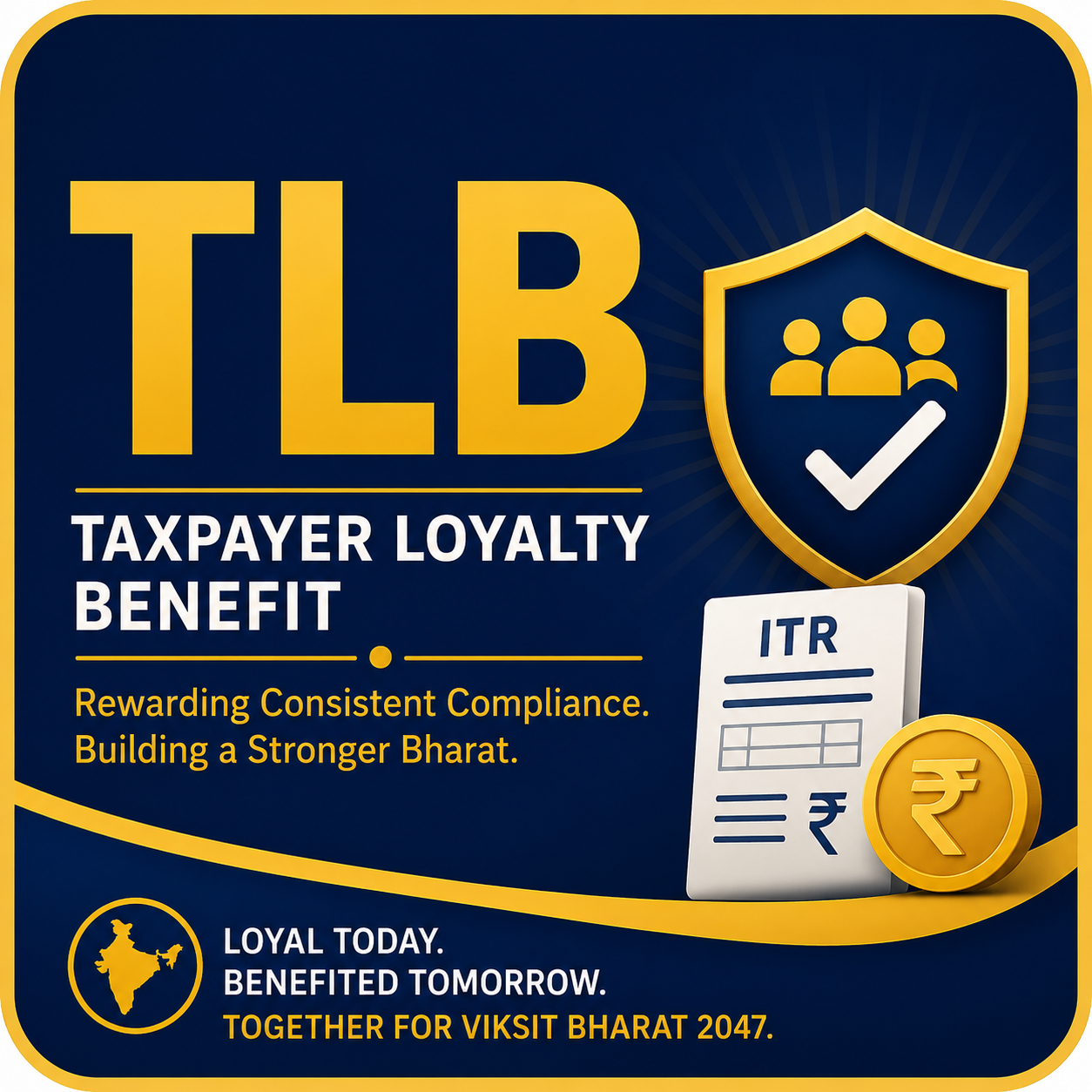
Policy concept submitted for Government consideration.
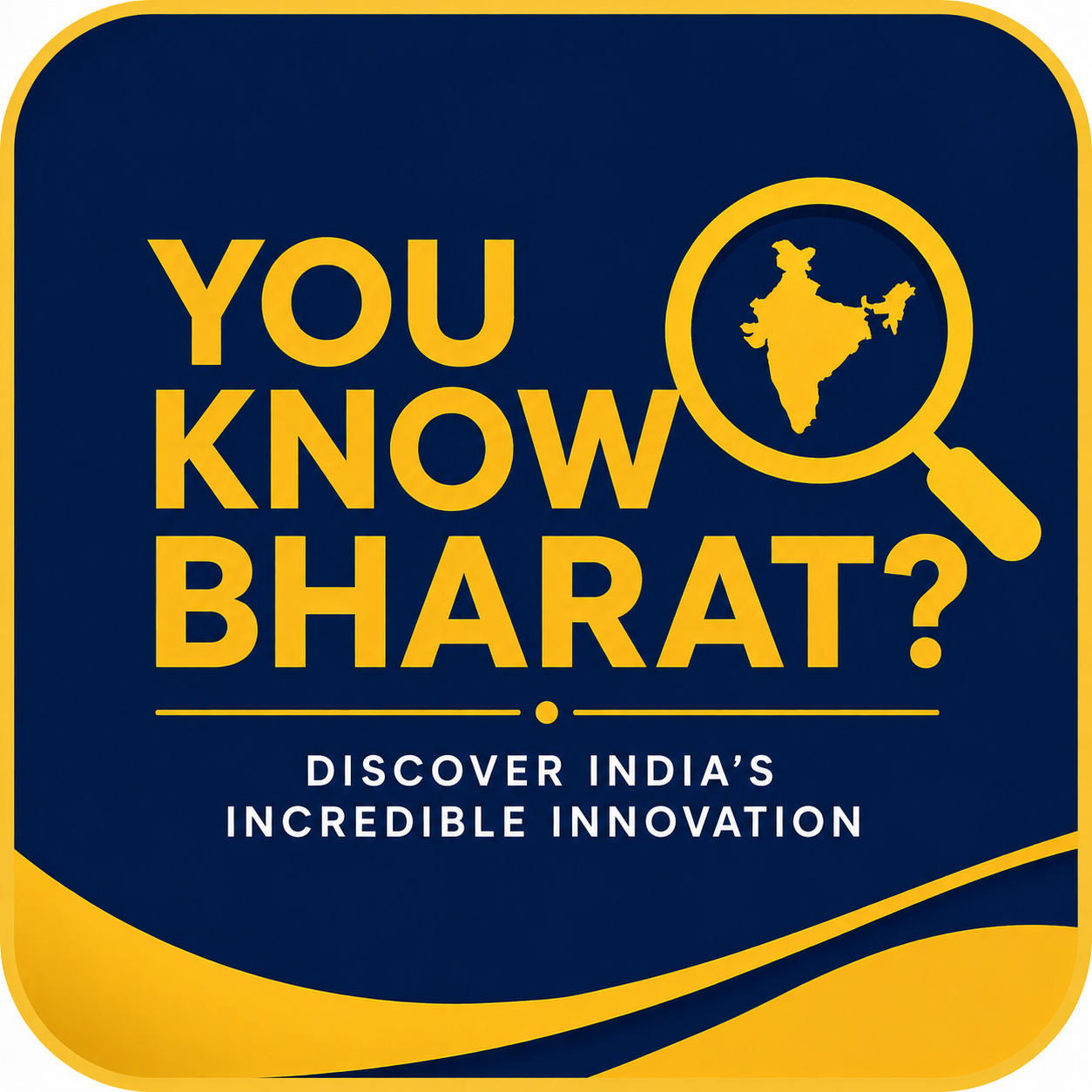
You Know Bharat? (YKB)
Live platform and evolving initiative.
5. From the Flywheel to Outcomes
The Innovation Flywheel exists to move promising opportunities towards meaningful outcomes.
VENTURE
INDUSTRY SOLUTION

FUTURE LEADER

NATIONAL IMPACT
The outcome depends on the nature of the opportunity, the solution developed and its potential for impact.
6. The Flywheel Continues
Every stage creates new learning. That learning can reveal new challenges, new opportunities and new possibilities for innovation — bringing the Flywheel back to DISCOVER.
Discover. Define. Develop. Demonstrate. Deploy.
And keep the cycle moving.